


 English
 中文简体
 русский
 Español

Nov 09,2026
One to two ounces is one of those ranges that looks trivial until somebody actually has to act on it. A buyer asks for a 2 oz bottle, a colleague weighs a bag of glass balls at 1.5 oz, and a specification sheet calls for 1 fl oz of liquid. Three requests, two completely different kinds of measurement, and a very easy way to get the numbers wrong.
We handle ounces every day at our plant, mainly because the products our customers pack come in small sizes: travel bottles, sample vials, nasal sprays, roll-on cosmetics, hand sanitizer. So here is how we think about 1-2 ounces, both as a weight and as a volume, and where those numbers genuinely change what you order.
Content
Ounce and Fluid Ounce Are Two Different Measurements
The first thing worth clearing up is that the word "ounce" covers more than one unit, and the difference is not academic.
An ounce (oz) is a unit of mass. The international avoirdupois ounce equals 28.349523125 grams, which most of us round to 28.35 g. So 1-2 ounces by weight works out to roughly 28.35 g to 56.70 g, or 0.0625 lb to 0.125 lb.
A fluid ounce (fl oz) is a unit of volume, and it does not convert to grams without knowing the density of the liquid. The US fluid ounce equals 29.5735 millilitres, while the imperial fluid ounce used in the United Kingdom equals 28.4131 millilitres. That is a gap of roughly four percent, which sounds harmless until you multiply it across a few hundred thousand filled bottles.
There is also the troy ounce at 31.1035 g, used for precious metals, and it is about ten percent heavier than the ordinary ounce. If you see ounces quoted for gold or silver, that is the one being used.
The practical consequence: a "2 oz" cosmetic jar on a shelf is almost always a volume claim of about 60 mL, while "2 oz" of glass balls in a purchase order is a mass of about 57 g. Same word, different question.
1-2 Ounces in Numbers: A Quick Reference Table
Below is the conversion set we reach for most often when a customer sends a size in ounces and we need it in millilitres or grams.
| From | To | Value |
|---|---|---|
| 1 fl oz (US) | millilitres | 29.57 mL |
| 2 fl oz (US) | millilitres | 59.15 mL |
| 1 fl oz (UK) | millilitres | 28.41 mL |
| 2 fl oz (UK) | millilitres | 56.83 mL |
| 1 oz (weight) | grams | 28.35 g |
| 2 oz (weight) | grams | 56.70 g |
| 1-2 oz (water) | cups (US) | about 1/8 to 1/4 cup |
Why 1-2 Ounces Shows Up So Often in Packaging
Travel and sample sizes cluster tightly in the 1-2 ounce band. A one-ounce perfume atomizer, a 30 mL serum bottle, a two-ounce hand sanitizer for a purse or a glove box, a 1.5 oz nasal spray: these are the sizes brands test the market with before committing to a full line, and they are the sizes consumers carry around.
For bottles in that range, the closure and pump have to match the neck finish, and the neck finish is what determines whether a component will fit at all. A 24/410 neck and a 28/410 neck are not interchangeable, and both appear frequently on one- and two-ounce containers. If you are sizing a small travel item and want to understand how the pump behaves in that kind of use, it is worth reading why a lotion pump suits travel and portable sizes before you lock in a specification.
 Plastic Fine Mist Sprayer for Perfume and Hand SanitizerA 118mm micro sprayer with 0.12cc output and 18/415 neck, suited to perfume and hand sanitizer formats where fine mist and precise dosing matter.View Product →
Pump dosage: how many strokes does an ounce give you?
This is where the ounce becomes a useful planning number rather than just a conversion. A pump's output per stroke is stated in cubic centimetres, and one cubic centimetre equals one millilitre.
A 4cc lotion pump therefore delivers about 4 mL each time it is pressed. Against a one US fluid ounce (29.57 mL), that is roughly 7.4 strokes, and about 15 strokes for a two-ounce bottle. A 2cc screw pump, common on personal care and hand soap packaging, gives around 15 strokes per ounce. A fine mist sprayer is a different story entirely, because each actuation is measured in fractions of a millilitre rather than whole cubic centimetres, so a one- or two-ounce mist bottle can be good for well over a hundred presses.
Knowing this lets you do something concrete: write a "dose per use" claim, estimate how long a travel bottle lasts, or decide whether a 2cc or 4cc engine is the right choice for the product inside.
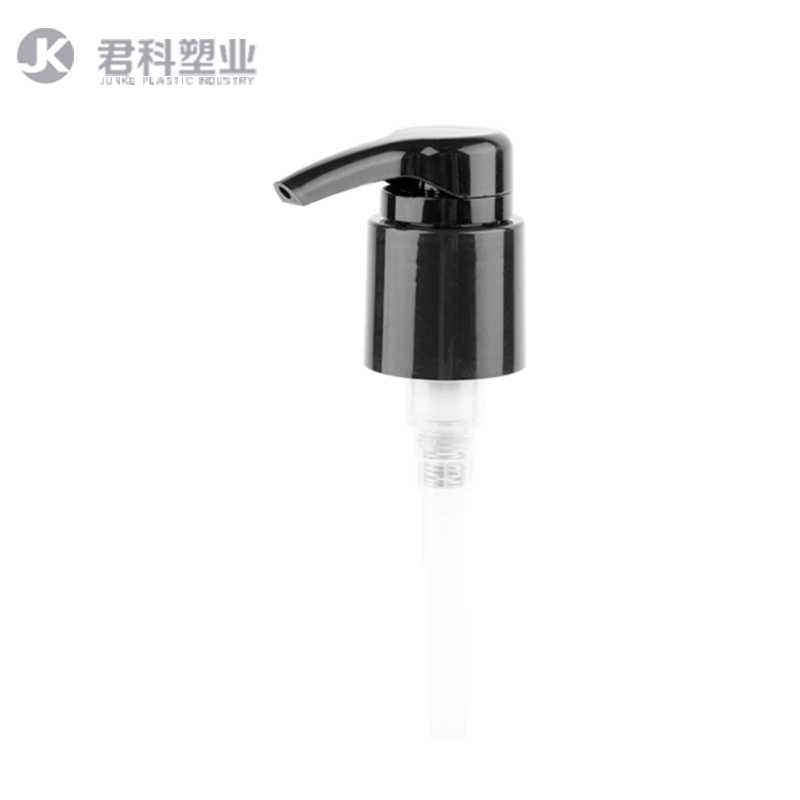 4.0CC Lotion Dispenser Replacement Pump, 28/410A 4.0CC replacement lotion pump for high-viscosity cosmetics, with 28/410 fitment; useful for estimating dose per use in thicker formulas.View Product →
Small parts are bought by weight, not by count
The other place ounces appear in our world is purchasing. Glass balls, steel balls and PP or POM balls are usually quoted per kilogram, but customers converting from older imperial specifications still talk in ounces. At 28.35 g to the ounce, 1-2 ounces of small spheres is a surprisingly large piece count: a few thousand 3 mm glass balls, or far more if the diameter is smaller.
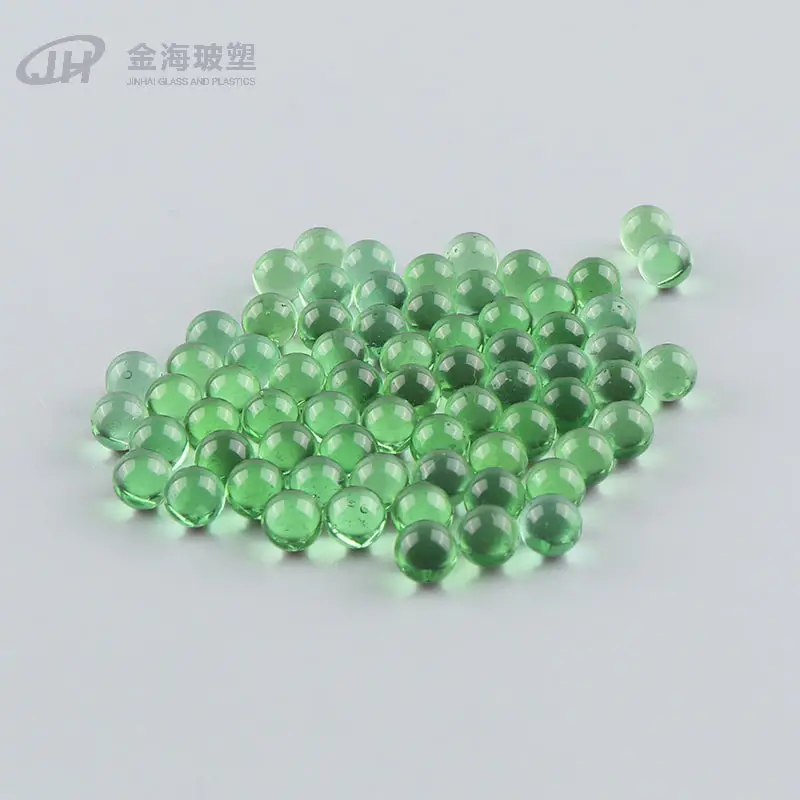 High Precision Glass Balls for Pump Systems2mm–5mm glass spray beads with smooth surfaces that absorb and release liquid gradually to help maintain spray stability in pump systems.View Product →
Converting 1-2 Ounces in Practice
If you need a reliable number and you do not want to open a browser tab, this is the order of operations we follow.
- Decide what is actually being measured. A liquid goes through the fluid ounce; a solid goes through the mass ounce. Guessing here is where most mistakes start.
- Confirm which ounce system applies. US fluid ounce, imperial fluid ounce, avoirdupois ounce and troy ounce all give different answers.
- Multiply. US fluid ounces by 29.5735 to reach millilitres, imperial fluid ounces by 28.4131, mass ounces by 28.3495 to reach grams.
- Check the result against something familiar. One ounce is a little under 30 mL, two ounces is a little over 59 mL, and two ounces of weight is half a standard stick of butter at about 57 g.
- Round to the precision your label or specification actually needs, and no further.
For 1-2 ounces specifically, the numbers you will most often use are 29.57-59.15 mL for US fluid ounces, 28.41-56.83 mL for imperial fluid ounces, and 28.35-56.70 g for weight.
Mistakes We See Most Often
After enough purchase orders and spec sheets, the same errors tend to surface.
- Writing "2 oz" on a specification without saying whether it means mass or volume, leaving suppliers to interpret it.
- Treating a UK fluid ounce as identical to a US fluid ounce. The four percent gap compounds quickly across production volumes.
- Reading "2 oz" on a bottle as the fill weight when it is actually a volume claim based on water.
- Rounding 28.3495 g down to 28 g for small components, then ordering thousands of pieces and discovering a shortfall.
- Assuming an ounce of small balls is a small quantity. It is not; it is a mass, and mass does not care about diameter.
Where 1-2 Ounces Meets Our Work
We are a manufacturer of pump components and finished pump heads, supplying glass balls, steel balls, plastic balls, PE gaskets, tubes, springs and complete lotion, mist, screw, switch and trigger pumps. Most of what we ship ends up inside a container measured in ounces, which is exactly why the difference between a fluid ounce and a weight ounce comes up in conversation so regularly.
If you would like to see the full range, our home page lists the components and pump families we produce, from individual balls and seals to assembled pump heads. We are happy to work backwards from your bottle size and target dose per use, and to tell you plainly which ounce you need to be talking about.