


 English
 中文简体
中文简体 русский
 Español
Oct 12,2026
If you have ever compared a 3.4 oz travel bottle with a 100 ml bottle at an airport security checkpoint, you already know the two are treated as the same size. The exact conversion is 3.4 US fluid ounces = 100.55 ml, and the industry usually rounds that to 100 ml. That one number appears on TSA restrictions, cosmetic labels, and packaging specifications, so it pays to know where it comes from and how to use it when choosing bottles, pumps, and seals.
Content
- 1 The Exact Conversion: 3.4 US Fluid Ounces to ml
- 2 US Fluid Ounce, UK Fluid Ounce, or Weight Ounce?
- 3 Why 3.4 oz and 100 ml Are Interchangeable in Travel Packaging
- 4 What a 100 ml Bottle Needs From Its Pump
- 5 Sealing, Leakage, and Compatibility
- 6 Common Misconceptions About oz to ml Conversion
- 7 Practical Advice for Packaging Buyers and Formulators
The Exact Conversion: 3.4 US Fluid Ounces to ml
One US fluid ounce equals 29.5735 ml. Multiplying 3.4 by 29.5735 gives 100.55 ml:
3.4 fl oz x 29.5735 ml / fl oz = 100.55 ml
Many conversion tools use 30 ml as a rounded factor, which produces 102 ml. That is acceptable for casual kitchen measuring, but not precise enough for packaging where a 100 ml fill volume can be a legal or shipping limit.
| US fluid ounces | Milliliters | Typical packaging use |
|---|---|---|
| 1.0 oz | 29.57 ml | Samples and sachets |
| 3.0 oz | 88.72 ml | Small spray bottles |
| 3.4 oz | 100.55 ml | TSA-compliant travel size |
| 4.0 oz | 118.29 ml | Lotions and cleansers |
| 6.8 oz | 201.10 ml | Half-bottle size |
| 8.0 oz | 236.59 ml | Toners and conditioners |
US Fluid Ounce, UK Fluid Ounce, or Weight Ounce?
“Fluid ounce” measures volume, not weight. A US fluid ounce is 29.5735 ml, while a UK imperial fluid ounce is 28.4131 ml. Therefore 3.4 UK fl oz equals 96.60 ml, about 4 ml less than the US value. Most products sold in North America use US fluid ounces, but imported fragrance lines sometimes use imperial measures.
A separate ounce, abbreviated oz when measuring weight, is 28.35 g. If you use an ordinary kitchen scale and a product density that is not 1 g/ml, 3.4 oz by weight may not correspond to 100 ml. Oils, alcohol, and suspensions can shift the volume significantly. When filling bottles, always use a volume-based calibration, not a weight conversion.
Why 3.4 oz and 100 ml Are Interchangeable in Travel Packaging
The 3.4 oz limit for carry-on liquids comes from TSA rules, and it is based on 100 ml per container. The exact value 3.38 oz rounds up to 3.4 oz for convenience. International regulations in other markets use 100 ml as well, which is why travel-size beauty products usually print both units on the label.
From a packaging perspective, the difference between the printed volume and the actual bottle capacity matters. A bottle labeled 100 ml will normally have a brimful capacity greater than 100 ml. The extra space, often 5-10%, leaves room for the pump dip tube, the closure, and product expansion at different temperatures. Filling a 100 ml bottle all the way to the neck would make it impossible to insert a lotion pump or fine mist sprayer without overflow.
What a 100 ml Bottle Needs From Its Pump
Once you know the fill volume is 100 ml, pump selection depends more on the bottle neck and the liquid's viscosity than on the exact milliliter count. Common neck finishes for small bottles include 24/410 for fine mist sprays, 28/410 for lotion and shower gel pumps, and 33/415 or 40/410 for larger lotion bottles. A pump made for 28/410 will not fit a 24/410 bottle, even if the volume is the same.
For perfume, facial toner, or hand sanitizer in a 100 ml bottle, a fine mist sprayer is often the first choice. It atomizes the liquid into small droplets and uses a dip tube that reaches near the bottom, allowing most of the 100 ml to be used. If you need to match spray output and droplet size to your formula, a micro sprayer selection guide explains the key parameters.
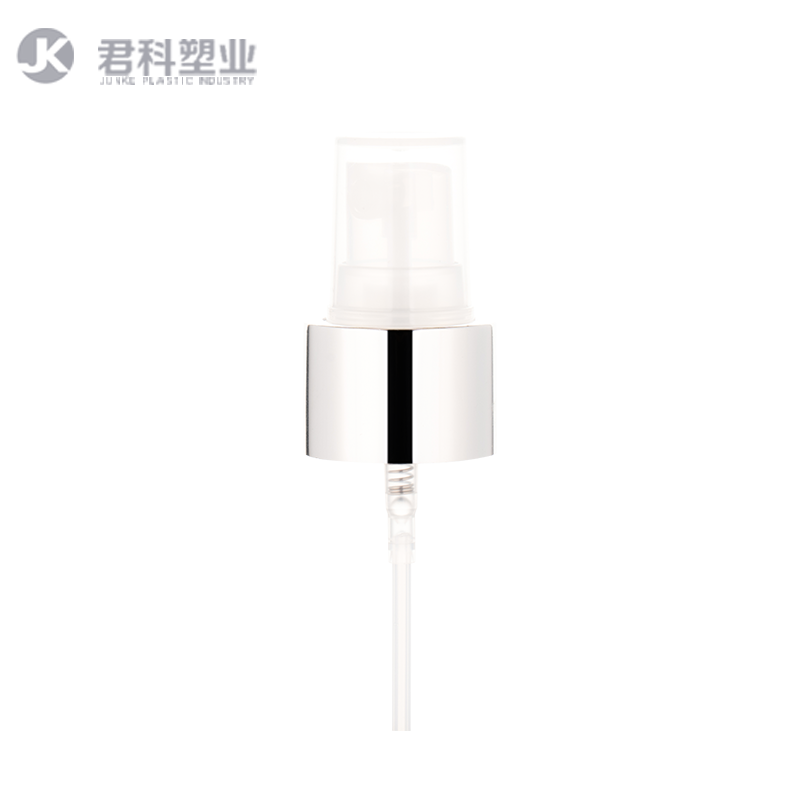 24/410 Aluminum Fine Mist Pump Sprayer for Perfume BottlesThis fine mist sprayer atomizes liquids into small droplets and features a dip tube that reaches near the bottom of a 100 ml bottle, maximizing product usage for perfumes, toners, or hand sanitizers.View Product →
For thicker products such as body wash, shampoo, or lotion, a 4cc lotion pump delivers roughly 4 ml per full stroke. On a 100 ml bottle, that gives about 25 doses. This dosing characteristic is useful when you want to state “25 pumps per bottle” on the package. A pump with a screw collar also keeps the pump tightly attached to the bottle, which is safer for travel.
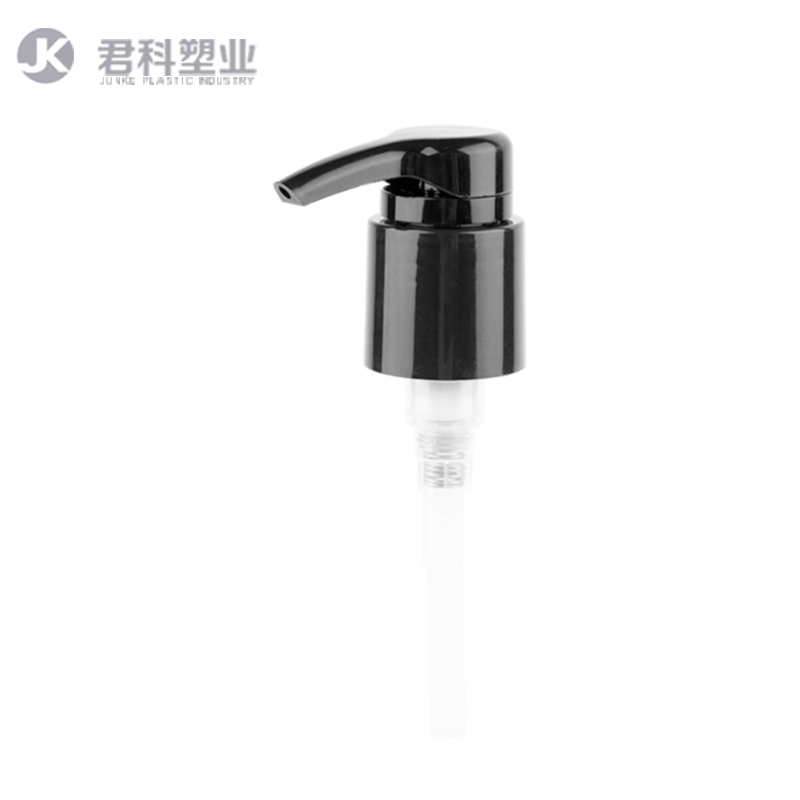 4.0CC Lotion Dispenser Pump with 28/410 Neck FinishDesigned for thick liquids like body wash or lotion, this pump delivers about 4 ml per stroke, giving roughly 25 uses per 100 ml—handy for labeling pump counts and reducing waste.View Product →
When comparing pumps, look at stroke volume, neck finish, and dip tube length in addition to the nominal 100 ml volume. Some suppliers list 4cc lotion pumps by closure size, which makes the selection process more straightforward.
Sealing, Leakage, and Compatibility
Even a well-fitted pump can leak if the seal between the pump and the bottle is not compatible with the liquid. The most common solution is a foam gasket inside the closure. It compresses when the pump is tightened and prevents leakage caused by pressure changes in airplane cabins.
PE foam gaskets are widely used because they resist water, alcohol, and mild chemicals. For products with alcohol or essential oils, an aluminum-foil-laminated PE gasket adds an extra barrier and helps maintain product integrity. When you buy pumps and bottles in separate lots, the gasket is often the forgotten component that turns a 3.4 oz bottle into a leaking reject.
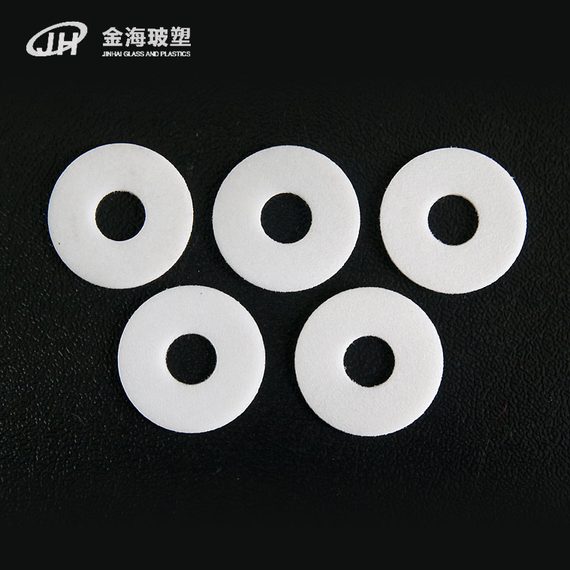 PE Foam Seal Gasket for Skin-Care Bottle LidsThis sealing gasket fits between pump and bottle to prevent leaks, especially important for alcohol or essential oil products. Its smooth surface and customizable sizes suit various closure types.View Product →
Before approving a new package, test the filled bottle upside down, in a warm environment, and at a simulated cabin pressure. A gasket that appears flat at room temperature can lose resilience in transit if the material density is too low.
Common Misconceptions About oz to ml Conversion
One common misconception is that 1 fluid ounce equals exactly 30 ml. Many conversion charts and filling machines use 30 ml per ounce as a convenience, but it is not the legal definition. The US definition is 29.5735 ml, so 3.4 oz is 100.55 ml rather than 102 ml. If you round at every step, the cumulative error can become visible on a 100 ml label.
Another misconception is that temperature does not matter. Liquids expand when warm, so a bottle filled to the brim at 20°C may spill when it reaches 35°C. That is why fill lines are set below the brim and why the pump dip tube should sit slightly above the bottom of the bottle.
Converters that mix weight and volume can also cause errors. 3.4 oz by weight of a creamy lotion might occupy less than 100 ml, leaving the bottle underfilled, or more than 100 ml, which could trigger shipping restrictions. Always specify “fluid ounce” when the discussion is about bottle capacity.
Practical Advice for Packaging Buyers and Formulators
When you turn “3.4 oz to ml” into a spec, be explicit about which ounce you mean. Write “3.4 US fl oz / 100 ml” on the drawing, and confirm whether the volume refers to nominal fill, brimful capacity, or actual fill weight. In our packaging factory, most mistakes happen when the buyer assumes the bottle volume is the fill volume, or when the pump gasket is selected without checking the liquid's alcohol content.
Use the conversion as the starting point, not the final answer. Confirm these points before ordering:
- Bottle neck finish, such as 24/410 or 28/410
- Pump output per stroke and dip tube length
- Gasket material and resistance to the formula
- Fill target: 100 ml nominal or 3.4 oz actual weight
That sequence reduces the risk of leaks, under-dosing, and label compliance problems, and it is the practical meaning of knowing that 3.4 oz equals 100.55 ml.