


 English
 中文简体
 русский
 Español

Nov 02,2026
Most packaging conversations start with the formula, the brand or the shape of the bottle. In our experience they should start with a number. When that number is 100 ml, a whole chain of decisions follows almost by itself: which pump fits the neck, how far the dip tube should reach, how thick the gasket needs to be, and which ball keeps the valve closing properly between doses.
We are Yuyao Jinhai Glass And Plastic Manufacturing Plant. For years we have produced the small parts that make sprayers and pumps work — glass balls, steel balls, POM and PP balls, PE gaskets, springs, PE and PP tubes, rubber rings and rubber stoppers — as well as complete lotion pumps, screw pumps, switch pumps, micro sprayers and trigger sprayers. That gives us an unusual view of the 100 ml format, because we see both the finished pump head and every part sitting inside it.
What follows is roughly the conversation we would have with you if you told us you were building a 100 ml pack.
Content
Why 100 ml Keeps Coming Back
There is a practical reason this fill size appears so often in product plans. It is small enough to travel, large enough to be a real product, and cheap enough to test a new formula without committing to a full run of bigger bottles. Perfume, facial toner, serum, hand sanitiser, hair oil, insect repellent, lens cleaner, spot treatment — the list of products that live comfortably in a 100 ml bottle is a long one.
From the production side, though, 100 ml is a demanding format. Because the bottle holds less, small inefficiencies become visible. A pump that leaves four millilitres behind in a 200 ml bottle is a minor annoyance; in a 100 ml bottle it is four percent of the product. A stiff spring feels stiffer when the user is gripping a small bottle with two fingers. And a gasket that lets the closure loosen slightly in transit shows up immediately as a ring of liquid in the carton.
Matching the Dispenser to a 100 ml Bottle
Fine mist sprayers
For anything that needs a light, even mist — perfume, toner, sanitiser, room spray — a micro sprayer is usually the first choice on a 100 ml bottle. The common neck finishes are 18/410, 20/410 and 24/410, with plastic or aluminium collars and half caps or screw caps depending on how the bottle will be displayed. Output per stroke matters more than people expect at this size: too much and the bottle empties in a few dozen presses, too little and the user pumps twice for every use.
 118mm Plastic Fine Mist Sprayer with 0.12cc OutputWith 118mm length, 0.12cc output and 18/415 closure, this fine mist sprayer suits perfume or hand sanitizer bottles needing light, even mist.View Product →
When you compare sprayers, look at the seal between the stem and the body as closely as you look at the spray pattern. On a small bottle that is carried in a bag, a tiny weep around the stem is the difference between a clean handbag and a complaint.
Lotion pumps
When the product is thicker — lotion, serum, body wash, hand soap, cleansing oil — a lotion pump is the natural partner. On a 100 ml bottle, 2cc and 4cc dosages dominate. A 4cc pump gives a generous single dose for body products, while 2cc suits facial care where a smaller, more controlled amount is expected. Neck finish, lock type and collar design all follow the bottle: 24/410 for slimmer packs, 28/410 when the shoulder is wider.
If you are weighing up the LP400J against other 4cc options, this breakdown of the LP400J covers neck sizes, lock systems and typical use cases in more detail.
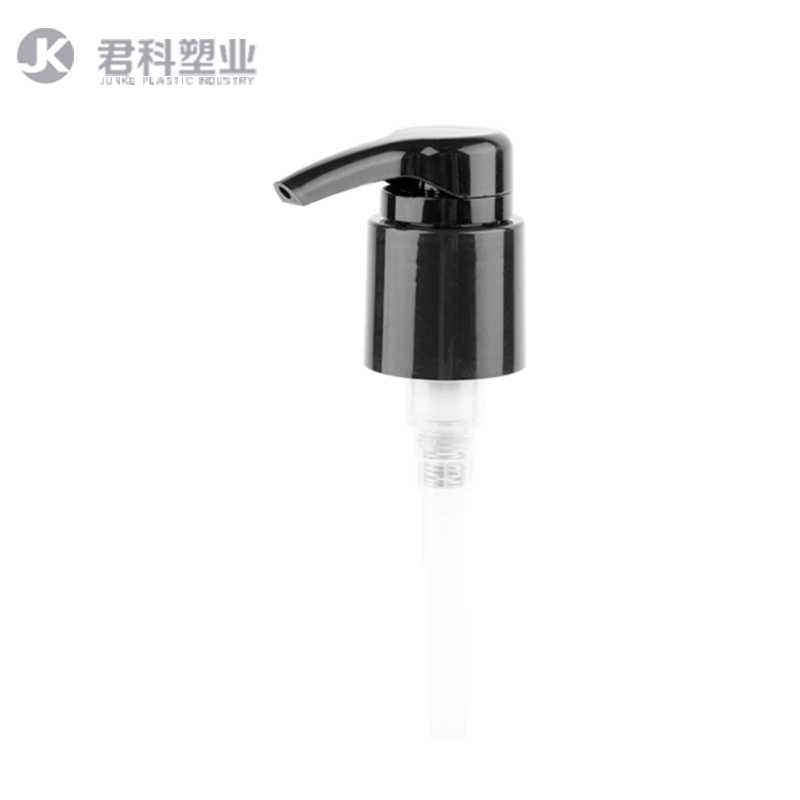 4.0CC Lotion Dispenser Replacement Pump 28/410 for High Viscosity ODMFor comparing 4cc options, this high-viscosity lotion pump has 4.0CC output and a 28/410 neck, though parameters also show 33/415 for ODM.View Product →
Trigger sprayers
Trigger sprayers on a 100 ml bottle are less common but perfectly workable for cleaning concentrates, garden treatments and automotive products. Output is usually somewhere between 0.8 and 1.2 ml per squeeze, which means a 100 ml fill gives roughly 80 to 120 uses — a useful argument when a customer is comparing concentrates. Most of these pumps use a 28/410 closure, and the trigger should be short enough that a small bottle does not tip over while it is being used.
A Quick Reference for 100 ml Packs
| Component | What it does | What to confirm |
|---|---|---|
| Glass ball | Seats the valve inside the pump and seals between doses | Diameter, roundness, chemical stability |
| PE gasket | Seals the closure against the bottle neck | Thickness, density, foil lining |
| Spring | Returns the pump head after each press | Material grade, wire diameter, stroke length |
| Dip tube | Carries product from the bottom of the bottle up to the pump | Inner and outer diameter, cut length, cut angle |
| POM or PP ball | Roller ball in applicators, float or agitator in other designs | Size, tolerance, surface finish |
The Parts Nobody Sees
PE gaskets are the quiet heroes of a small pack. The foam version is light, compressible and inexpensive, and foil-lined versions add barrier protection for formulas that are sensitive to air or moisture. Thickness and density are the two numbers worth getting right: a gasket that is too thin will not fill the small irregularities in a glass or plastic neck, while one that is too thick can make a screw closure feel hard to tighten and difficult to close by machine.
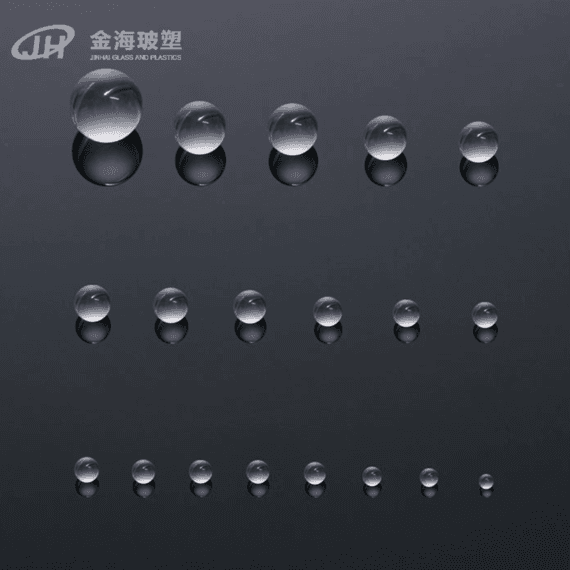
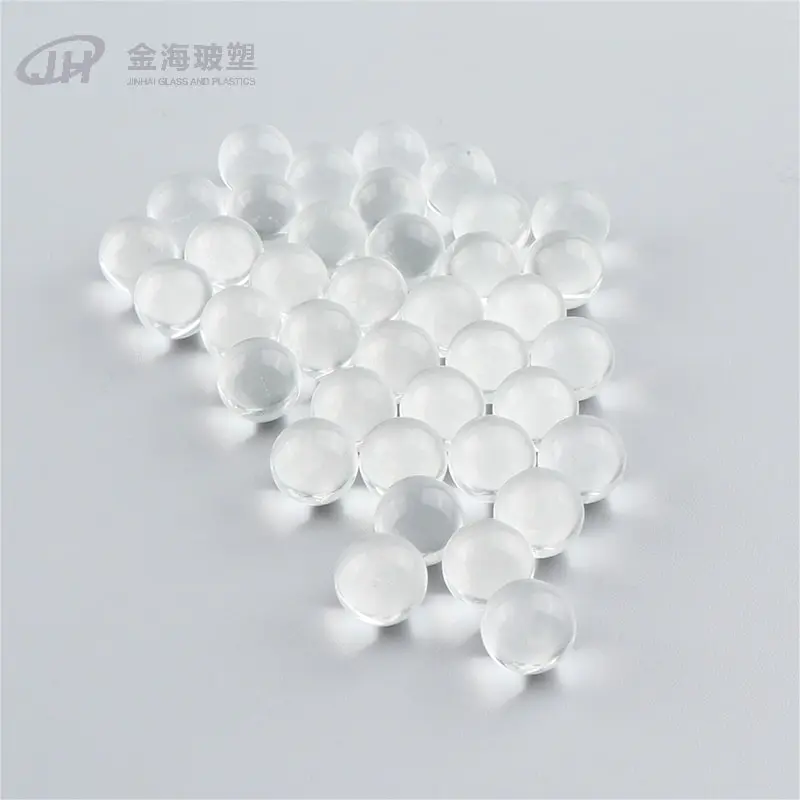
Glass balls have been our core product for years, and they are what turns a pump body into a working valve. In a 100 ml pack the ball is often only a few millimetres across, which is exactly why tolerance matters — a ball that is slightly out of round will not seat evenly, and the pump will dribble or lose its prime. Soda-lime glass offers good chemical stability and wear resistance, and frosted or solid lime versions can be specified depending on how the pump is assembled.
Springs do the returning work. Most lotion pumps and sprayers use 304 or 316 stainless steel compression springs, cylindrical or conical, and the choice usually comes down to corrosion resistance and how much force the user should feel. On a small bottle, a lighter spring is generally kinder to the hand, provided it is still strong enough to close the valve reliably.
Dip tubes are where 100 ml packs go wrong most often. A rule of thumb we use is to cut the tube so it stops two to four millimetres above the inside base, with a slightly angled tip so it cannot sit flat against the bottom and block itself. Transparent PE and PP tubes cover most cosmetic and cleaning applications, and a smaller inner diameter primes faster because there is less air to move before liquid arrives.
 Flexible PE Tubes for Customizable Mini Sets and Travel-Size ProductsFlexible PE tubes suit customizable mini sets and travel-size packaging, offering soft, low-density, tear-resistant material for cosmetic wholesale applications.View Product →
Neck Finish, Lock and the Details People Forget
The neck finish is the contract between bottle and pump. A 24/410 pump will not seal properly on a 20/410 bottle, and a 28/410 closure on a 100 ml bottle often looks oversized and unbalanced. Get the neck finish, the closure height and the thread type settled first, and most of the remaining specification falls into place quickly.
Two more details are easy to overlook. The first is the lock. For a bottle that travels in a bag, an up-down lock or a left-right lock is close to essential; without one, pressure on the pump head in transit will push product into the cap. The second is decoration — UV coating, water transfer printing, ribbed collars and colour matching. These are cosmetic decisions in one sense, but on a 100 ml bottle they carry more visual weight than on a large container, because the pump head occupies a bigger share of the total surface.
Before You Place the Order
- Send the bottle drawing, including neck finish, thread type and internal depth.
- Tell us the viscosity and the ingredients that touch the gasket and the ball.
- Confirm the dose per stroke and the number of uses you expect from a 100 ml fill.
- Decide the dip tube length and cut angle based on the inside base of the bottle.
- Choose the lock system and closure style that fits how the product is stored and sold.
- Ask for samples assembled on your own bottle before committing to a production run.
None of these steps takes long, but skipping any one of them usually costs more time later — in re-tooling, in returns, or in a customer complaint that could have been avoided at the drawing stage.
If you are working on a 100 ml project and already know your neck finish, dosage and tube length, send us those three details and we will come back with options rather than a catalogue. We mainly supply B2B customers — cosmetics, personal care, pharmaceutical, cleaning and industrial buyers — and we export to markets including India and Russia. Our team supports OEM and ODM work, custom moulds for non-standard parts, and short lead times with in-house quality control on every batch.
You can start by browsing our full component and pump range, or simply tell us what your 100 ml bottle has to do. Often the smallest part is the one that decides whether the whole package works.